Cold-Weather DPF Clogging in School Buses: What Short Routes and Freezing Mornings Do to Your Exhaust System

DPF blocked symptoms on a school bus show up in a predictable order: more frequent regenerations, regenerations that do not finish, a power derate under load, and finally a hard derate. In winter the cause is usually route profile rather than mileage. A short morning run with frequent stops, hours parked in a cold lot and a short afternoon run seldom hold exhaust temperature long enough to burn off soot. The filter loads faster than the engine can clear it, and the restriction climbs until the engine control module reduces power to protect the school bus exhaust aftertreatment.
Why Short Winter Routes Clog a Diesel Particulate Filter
A diesel particulate filter cleans itself by regeneration. Passive regeneration happens when exhaust runs hot enough under sustained load. Active regeneration raises exhaust temperature on purpose. Both need the engine to run under load long enough to finish the cycle.
A school bus route works against both. Low average speed, idling at stops, long cold soaks between runs and cold ambient air all pull heat out of the system. A regeneration cut short by the end of a route leaves soot behind, and the next short route adds more. The inspection side of the same component, including when to clean and when to replace, is covered in School Bus DPF Inspection and Replacement.
DPF Blocked Symptoms, in the Order They Appear
Catching the sequence early is the difference between a cleaning and a replacement.
Regeneration frequency rises. Drivers report the regeneration cycle more often, or fleet telematics show shorter intervals between active regenerations. No fault is logged yet.
Regenerations stop completing. The indicator stays on past the end of the route because the route ended before the cycle did.
A power derate arrives under load. It usually shows first on a grade or when pulling away fully loaded.
A hard derate follows. At this stage the filter may carry ash as well as soot, and cleaning may not recover it.
A pressure differential reading taken at the first stage is diagnostic. The same reading at the last stage only confirms what the dash already shows.
What to Check Before Condemning the Filter
Several failures can look like a blocked DPF, and the joints around the canister cost less to fix than the filter. Work through them in this order.
Look for leaks between the turbo and the filter. Exhaust escaping upstream changes the pressure the sensors read. Soot tracks at a flange or a slipped clamp are the sign.
Check the DPF and DOC body gaskets. A failed gasket leaks at the canister itself. CUMGS1772 is the Cummins DPF and DOC body gasket for the B6.7 and L9 family.
Check V-band clamp tension. DPFVCL7471 is the 12.75 inch V-band clamp for the Cummins B6.7 and L9, and DPFVCL0212 is the T-bolt V-band clamp for the Cummins ISB 6.7, ISC 8.3 and ISL9.
Inspect the pipe that feeds the filter. It carries the movement between a rigid canister and a flexing engine. Thomas Built bellows to DPF pipes are TPINT999 for the Cummins ISC, TPINT436 for the Cummins ISB07 and TPINT350 for the Mercedes-Benz MBE 07, all 2007 and up, and TEDPF264 for the Flat EFX with the Cummins ISB 6.7 from 2012 up. FRLDPF85 is the Freightliner DPF inlet pipe for the Cummins ISB, 2007 and up.
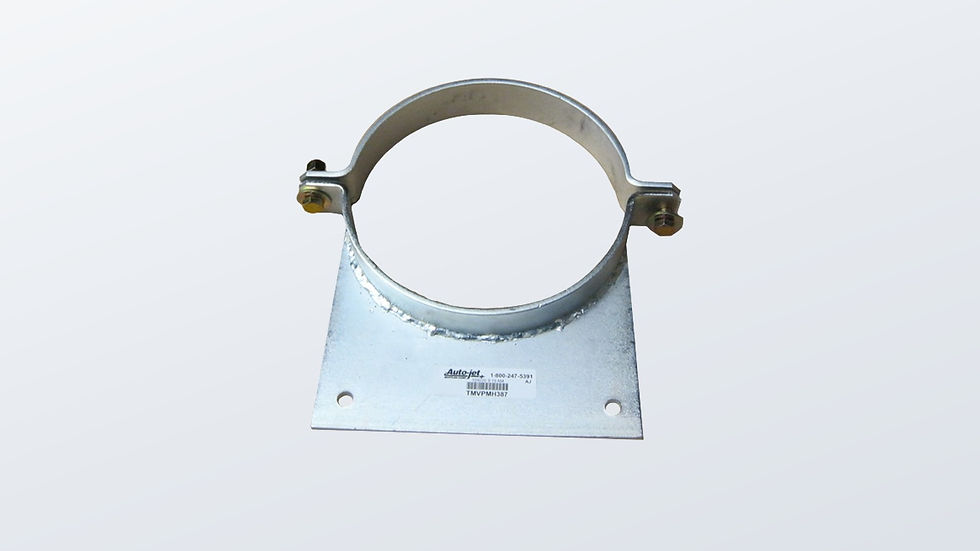
Check the DPF hangers. A sagging canister puts load back into the pipe and the clamps. BBHGR6854 is the Blue Bird DPF hanger and TMVPMH387 is the Thomas Built rear engine Cummins ISB DPF hanger.
Replacement Diesel Particulate Filters by Engine
These filters are listed by engine rather than by bus brand. Call to confirm fitment by OE number before ordering.
Cummins ISB: DPF287NX
Cummins ISB and ISC, stainless steel, 2007 and up: DPF838NX
Cummins ISC, ISL and ISM, 2007 and up: DPF737NX
Cummins ISL and ISM, 2007 and up: DPF463NX
Cummins, replaces OE 2510616C91, 2510795C91, 5011031R91 and 5295609NX: DPF609NX
Caterpillar C9, stainless steel, 2007 and up: DPF6089
Navistar International MaxxForce 9, 2010 and up: DPF521C91
Navistar International MaxxForce 13, 2010 and up: DPF3C91
What a Fleet Can Control
No part turns a 20 minute stop-and-go route into a highway cycle. What a fleet can control is catching the symptom sequence at the first stage and keeping the system sealed, so the sensors read the filter rather than a leak.
Two habits make the sequence visible early. Log regeneration frequency per bus rather than per fleet, so a rising trend on one unit stands out, and inspect every joint between the turbo and the filter at the same interval as the filter. Filters, gaskets, clamps and hangers are listed by part number in the Auto-jet parts catalog.
Frequently Asked Questions
What are the symptoms of a blocked DPF on a school bus?
More frequent regenerations first, then regenerations that do not complete, then a power derate under load, then a hard derate. An indicator that stays on past the end of a route means the filter is loading faster than the route can clear it.
Why do school buses clog DPFs in cold weather?
Route profile. Short runs, frequent idling and long cold soaks between the morning and afternoon routes rarely hold exhaust temperature long enough to complete a regeneration.
Can an exhaust leak look like a blocked DPF?
Yes, and it is the first thing to rule out. Exhaust escaping upstream of the filter changes the pressure differential the sensors read. A failed body gasket, a loose V-band clamp or a cracked inlet pipe can all produce a reading the filter itself does not explain.
Does a blocked DPF always need to be replaced?
No, not if it is caught before ash buildup limits it. Cleaning recovers a soot-loaded filter. Once ash has built up past what cleaning can recover, replacement is the path. Call to confirm the correct filter by engine and OE number.
Request a Quote or call 800-247-5391 to identify a diesel particulate filter, gasket or clamp by engine or OE number.